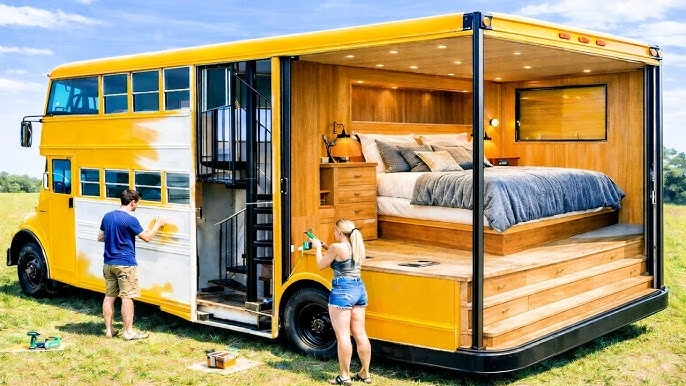
Most people see an old bus and think of one thing: transportation.
Maybe it reminds them of long commutes, crowded seats, or school-day memories. Some might even see it as scrap — outdated, worn out, and ready to be discarded.
But for one man, an old bus became something entirely different.
It became a home.
Not just any home — but a thoughtfully designed, comfortable, and inspiring living space that challenges everything we think we know about housing.
This is the story of how creativity, determination, and vision turned a simple vehicle into a dream home on wheels.

A Different Kind of Dream
For years, this man lived a fairly typical lifestyle.
A fixed address.
Monthly bills.
Routine responsibilities.
But over time, something started to feel off.
The idea of being tied down to one place didn’t sit right anymore. Rising living costs, limited flexibility, and the desire for something more meaningful pushed him to rethink his lifestyle.
He didn’t just want a house.
He wanted freedom.
The kind of freedom that allows you to wake up in a new place whenever you choose. The kind that isn’t restricted by rent agreements or long-term commitments.
That’s when the idea struck him.
What if his home could move with him?
Why a Bus?
When people think of mobile homes, they usually imagine caravans or RVs.
So why a bus?
The answer was simple.
Space and structure.
Buses are built to carry many people, which means they’re structurally strong and spacious compared to most vehicles. Their rectangular shape makes them ideal for designing a functional interior.
And perhaps most importantly — they can often be purchased at a relatively affordable price compared to traditional homes.
For him, it was the perfect starting point.
The Beginning: An Empty Shell
When he first acquired the bus, it was far from impressive.
The seats were worn out.
The flooring was damaged.
The interior looked tired and outdated.
It was essentially an empty shell — a far cry from anything resembling a home.
Most people would have seen a long list of problems.
But he saw potential.
Stripping It Down
The transformation began with a complete teardown.
Every seat was removed.
Old panels were stripped away.
The flooring was taken out.
What remained was a bare metal structure.
This step was crucial.
Before building something new, he needed a clean slate.
It wasn’t glamorous work. It took time, effort, and patience. But with every piece removed, the vision became clearer.
Planning the Layout
Designing a home inside a bus isn’t like decorating a normal house.
Every inch matters.
He carefully planned how to use the available space.
Where would the bed go?
How could he include a kitchen?
Was there room for a bathroom?
What about storage?
The goal wasn’t just to make it look good — it had to be practical.
After all, this wasn’t a weekend project.
This would be his full-time home.
Insulation and Comfort
One of the biggest challenges in converting a bus into a home is temperature control.
Metal structures heat up quickly in summer and become extremely cold in winter.
To solve this, he installed proper insulation throughout the bus.
Walls.
Ceiling.
Floor.
This step made a massive difference.
It turned the bus from an uncomfortable shell into a space that could actually retain warmth and stay cool when needed.
Building the Interior
With the foundation ready, the real transformation began.
Flooring
He installed new flooring that was both durable and visually appealing.
It added warmth and instantly made the space feel more like a home rather than a vehicle.
Walls and Ceiling
The walls were covered with clean, simple panels.
The ceiling was designed to feel higher and more open, avoiding the cramped feeling that small spaces often have.
The Kitchen
Despite limited space, he managed to include a compact kitchen.
It featured:
- A small countertop
- Storage cabinets
- A cooking area
- Basic utilities
It wasn’t large, but it was functional — and that’s what mattered.
The Living Area
Instead of filling the space with bulky furniture, he chose a minimalist approach.
A small seating area provided comfort without overcrowding the interior.
Multi-purpose furniture helped maximize usability.
The Sleeping Space
The bed was designed to fit perfectly within the layout.
Comfortable, practical, and positioned in a way that didn’t interfere with movement inside the bus.
In small homes, smart placement makes all the difference.
Natural Light Changes Everything
One of the most important elements of the design was light.
He made sure to maximize natural light by using the bus windows effectively.
The result?
A bright, open-feeling interior that doesn’t feel confined.
During the day, sunlight fills the space, making it feel larger than it actually is.
Storage Solutions
Living in a compact space requires smart storage.
He added:
- Built-in cabinets
- Hidden compartments
- Shelves along the walls
Everything had a place.
This kept the space organized and clutter-free.
Adding Personal Touches
A house becomes a home when it reflects the person living in it.
He added small details that brought personality into the space.
Simple decor.
Functional design elements.
Warm textures.
Nothing excessive — just enough to make it feel lived in and comfortable.
Life on the Road
Once the transformation was complete, his life changed in ways he hadn’t imagined.
He wasn’t tied to one location anymore.
He could travel.
Explore new places.
Wake up to different views.
His home wasn’t just a place to stay.
It became part of the journey.
The Benefits of Bus Living
This lifestyle isn’t just about aesthetics.
It offers real advantages.
1. Flexibility
You’re not tied to one place.
You can move whenever you want.
2. Lower Costs
Compared to traditional housing, the expenses can be significantly reduced.
No rent.
Lower utility costs.
Minimal maintenance.
3. Simplicity
Living in a smaller space encourages a simpler lifestyle.
Fewer possessions.
Less clutter.
More focus on experiences.
The Challenges to Consider
Of course, this lifestyle isn’t perfect.
It comes with challenges.
Limited Space
You have to be mindful of what you own.
There’s no room for unnecessary items.
Maintenance
Since it’s still a vehicle, regular maintenance is important.
Planning Utilities
Water, electricity, and waste management require thoughtful setup.
Why This Story Resonates
This transformation isn’t just about a bus.
It’s about perspective.
Seeing possibilities where others see limitations.
Creating something meaningful with what you have.
It shows that a home doesn’t have to follow traditional rules.
Could This Be the Future of Living?
With rising housing costs and changing lifestyles, alternative living solutions are becoming more popular.
Tiny homes.
Van life.
Bus conversions.
People are rethinking what it means to live comfortably.
And stories like this are inspiring more people to explore these options.
Final Thoughts
What started as an old, unused bus became something extraordinary.
A home.
A lifestyle.
A symbol of freedom.
It proves that with the right mindset, even the most unexpected spaces can be transformed into something beautiful.
So the next time you see an old bus, don’t just see what it is.
Think about what it could become.
Because sometimes, the road to your dream home… literally begins on wheels.