When you think of a shed, what comes to mind?
For most people, it’s not exactly a place you’d want to live in. Sheds are usually tucked away in the backyard, quietly collecting dust and clutter. They’re often used to store old tools, broken furniture, unused tires, or things we simply don’t have the heart to throw away.
Cold in winter.
Humid in the rainy season.
Hot and suffocating in summer.
In short, not the kind of place you’d ever imagine calling “home.”
But what if that idea is completely wrong?
What if a shed could become something more — something warm, beautiful, and full of life?
This is the story of an elderly woman who proved exactly that.

When Life Takes an Unexpected Turn
Life doesn’t always go as planned.
For this elderly woman, things took a difficult turn when she found herself facing the possibility of losing her home. Rising expenses, limited income, and circumstances beyond her control forced her into a situation many people fear — not knowing where she would live next.
She didn’t have many options.
No large savings.
No alternative property.
No easy solutions.
But she did have one thing.
An old shed.
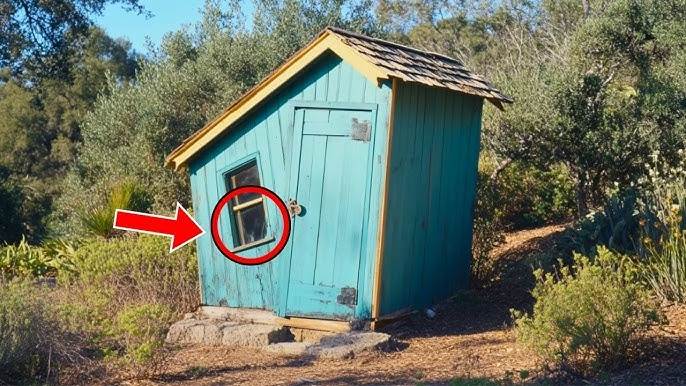
It stood quietly on a small piece of land — neglected, unused, and far from livable. At first glance, it didn’t look like a solution at all. In fact, most people would have dismissed it immediately.
But she saw something different.
Not what it was…
But what it could become.
The Shed: A Space Full of Challenges
Let’s be honest — the shed wasn’t pretty.
It was cluttered with old, forgotten items. Dust covered nearly every surface. The wooden structure had aged, and the inside felt damp and uncomfortable.
The air was heavy with humidity.
There was no insulation.
No proper flooring.
No decoration.
No warmth.
Just an empty, lifeless space that felt more like storage than shelter.
Anyone walking into it would probably step out within minutes.
But for her, walking away wasn’t an option.
This shed wasn’t just a structure anymore.
It was her chance to rebuild.
The First Step: Clearing the Chaos
Every transformation starts somewhere.
For her, it began with one simple but powerful decision — to clean.
Piece by piece, she started removing everything that didn’t belong. Old tools, broken items, unnecessary clutter — all of it had to go.
It wasn’t easy.
The work was physically demanding, especially at her age. But she didn’t rush. She took her time, working steadily, day by day.
Slowly, the shed began to breathe again.
Light entered more freely.
Space started to open up.
And for the first time, she could actually see the structure she was working with.
It still wasn’t beautiful.
But it was no longer overwhelming.
A Vision Begins to Take Shape
Once the clutter was gone, something interesting happened.
The shed didn’t feel like a storage unit anymore.
It felt like a blank canvas.
And that’s when her creativity truly began to shine.
She started imagining how each corner could be used.
Where would the bed go?
Could there be a small seating area?
Was it possible to add a kitchen?
What about lighting?
Instead of focusing on limitations, she focused on possibilities.
That shift in mindset made all the difference.
Transforming the Exterior
Before working too much on the inside, she turned her attention to the outside.
After all, a home doesn’t begin at the front door — it begins from the moment you see it.
The shed’s exterior had seen better days.
The paint was faded.
The surface looked worn.
It lacked any sense of warmth or personality.
So she decided to change that.
With a fresh coat of paint, the entire structure started to come alive. She chose colors that felt welcoming and calm — something that reflected comfort rather than just utility.
But she didn’t stop there.
She added small decorative touches.
Simple, thoughtful details that made a big difference.
Then came the lighting.
She placed a few lights along the pathway leading to the shed. At night, they created a soft, inviting glow — turning what was once a forgotten structure into something that felt safe and welcoming.
Finally, she replaced a few of the windows.
This wasn’t just about appearance.
It was about light.
Natural light has a powerful effect on how a space feels, and she understood that.
With better windows, the shed instantly felt more open, more alive.
The Real Transformation: Inside the Shed
While the exterior improvements were impressive, the real magic happened inside.
At the beginning, the interior was almost unrecognizable as a living space.
Bare walls.
Rough wooden flooring.
No insulation.
No design.
It felt cold — both physically and emotionally.
But step by step, she began to change that.
Creating Warmth and Comfort
One of the first things she focused on was warmth.
A home should feel comfortable, especially in colder months. So she worked on improving insulation and sealing gaps that allowed cold air to enter.
Then came the flooring.
Instead of leaving it rough and unfinished, she added layers that made it smoother and more pleasant to walk on.
Next, she introduced color.
Soft tones replaced the dull, lifeless surfaces.
The walls were no longer just wooden panels — they became part of a living, breathing space.
Designing a Functional Living Space
Space was limited, so every decision mattered.
She carefully planned how to use each area efficiently.
At the center, she placed a cozy couch — a simple yet essential element that made the space feel like a true living room.
It wasn’t just furniture.
It was a symbol of comfort.
Then she added a small kitchen setup.
Nothing extravagant.
Just enough to cook simple meals and maintain independence.
Shelves were installed for storage.
Compact solutions replaced bulky ones.
Everything had a purpose.
And everything had its place.
Letting Light Transform the Space
One of the most noticeable changes came from lighting.
Natural light streamed through the improved windows and doors, instantly making the space feel larger.
Brighter.
More open.
More alive.
She also added soft indoor lighting for evenings, creating a warm and peaceful atmosphere.
It’s amazing how much lighting alone can change the mood of a space.
A Personal Touch Makes It a Home
What truly set this transformation apart wasn’t just the physical changes.
It was the personality.
She added small decorations — items that reflected her taste, her memories, and her story.
A few plants.
Simple artwork.
Carefully chosen fabrics.
These details turned the shed into something more than just a living space.
They made it hers.
From Shed to Sanctuary
By the time she finished, the transformation was remarkable.
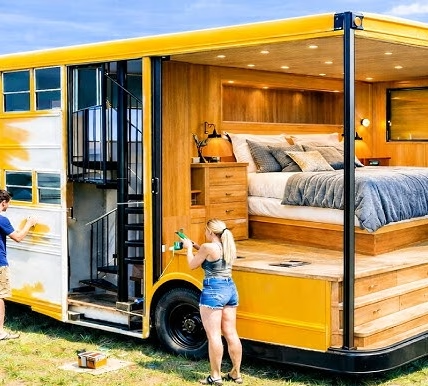
What was once a cold, cluttered shed had become a warm, inviting home.
A cozy couch sat at the center.
A functional kitchen allowed her to cook and live independently.
Natural light filled the room.
The doors opened to a small terrace, adding a sense of openness that few would expect from such a compact structure.
If you walked in without knowing its history, you’d never guess it was once just a storage shed.
A Different Way of Thinking About Home
This story challenges a common belief.
That bigger is always better.
That comfort requires space.
That a “real home” must look a certain way.
But her journey proves otherwise.
A home isn’t defined by size.
It’s defined by how it makes you feel.
Safe.
Comfortable.
At peace.
Sometimes, a smaller, well-designed space can offer more warmth than a large, impersonal house.
Why This Transformation Matters
This isn’t just about a shed.
It’s about resilience.
Creativity.
And the ability to adapt when life becomes uncertain.
Her story reminds us that even in difficult situations, there are possibilities.
That with effort and vision, we can create something meaningful out of very little.
Could You Do the Same?
Take a moment to think about it.
If you were given an empty, cold shed…
Would you see potential?
Would you take the risk?
Would you have the patience to transform it?
It’s not easy.
It requires time, effort, and determination.
But as this story shows, it’s absolutely possible.
Final Thoughts
The next time you see a shed, you might look at it differently.
Not just as a storage space.
But as an opportunity.
Because sometimes, the most unexpected places hold the greatest potential.
And sometimes…
Home isn’t something you find.
It’s something you create.